
Brain-Eating Amoeba in Kerala, India: A 97% Mortality Rate
Shevane Subramaniam
In Kerala, ponds and wells are part of daily life: places to bathe, pray, and cool off. This year, they have also become a source of fatality. Health officials report new cases of a rare brain infection linked to warm, untreated freshwater. Families are adjusting small habits, including how children play, how rituals use water, and how swimmers protect their noses, while doctors push for earlier testing and faster treatment.
A Fast-Spreading Disease
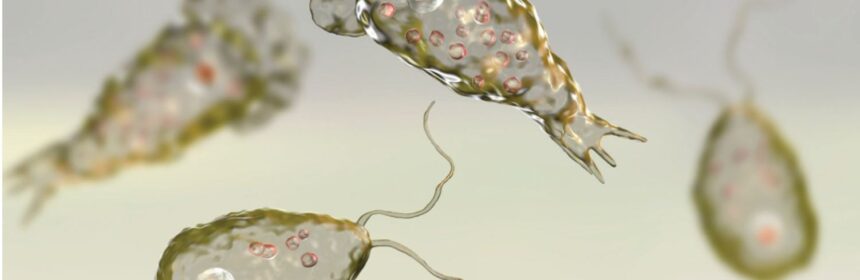
This microscopic threat is invisible in the warm ponds, rivers, and wells that are an integral part of daily life in Kerala. The amoeba enters through the nose during swimming or even through nasal rinsing rituals, travels to the brain, and destroys tissue within days. It has a global fatality rate of 97%. Since 1962, only 488 cases have been reported worldwide, mostly in the United States, Pakistan, and Australia. In India’s southern state of Kerala alone, there have been nearly 70 cases this year and 19 deaths. Patients have ranged from a three-month-old baby to a 92-year-old man.
Sobhana, 45, bottled fruit juices in Malappuram. Days before Onam, a cultural festival in Kerala, she felt dizzy and was treated for high blood pressure. Her symptoms escalated quickly, from fever to violent shivers. On Sept. 5, the festival’s main day, she passed away. Only afterward, her family learned the name of the cause: Naegleria fowleri, the “brain-eating” amoeba that can enter through the nose in warm freshwater and trigger primary amoebic meningoencephalitis. Her story is not an abnormality, as Kerala has reported nearly 70 cases this year and 19 deaths, from infants to the elderly in their 90s.
An Old Threat Returns
For decades, this disease was a rare medical case and was regarded as a phenomenon that most doctors only read about. However, Kerala has become a center of growing concern. As temperatures rise and water grows warmer, the state’s 5.5 million wells and 55,000 ponds are becoming ideal breeding grounds. Health officials say that last year there were 39 cases and a 23% fatality rate. This year, early testing and advanced lab research have brought the fatality rate down to 24.5%.
“Cases are rising, but deaths are falling. Aggressive testing and early diagnosis have improved survival—a strategy unique to Kerala,” said Dr. Aravind Reghukumar, head of infectious diseases at the Medical College and Hospital in Thiruvananthapuram.
Public Health vs. Tradition
However, the fight is not simple. Wells and ponds aren’t just risk factors, as they are part of daily life in Kerala. Local governments have chlorinated 2.7 million wells and posted warning signs, but ponds cannot be easily treated without killing fish, and policing every water source for 30 million people is impossible. Instead, officials emphasize awareness. They urge families to use clean water for rituals, cover their noses when swimming, and avoid stirring sediment in stagnant ponds. The state has shifted focus from restriction to education.
A Global Warning
Scientists are also pointing to a larger root cause: climate change. Warmer waters and longer summers create ideal breeding grounds for the amoeba. “Even a one-degree rise can trigger its spread in Kerala’s tropical climate,” explained Dr. Anish TS, a leading epidemiologist.
Dr. Dennis Kyle, professor of infectious diseases at the University of Georgia, noted that in many countries, past cases likely went unrecognized: “Frequent monitoring for proper chlorination can significantly reduce chances of infection,” he said.
Beyond Kerala
This is not only Kerala’s story. Naegleria fowleri shows that other rare diseases can easily spread as waters warm. When ponds, rivers, and wells that once meant daily life can also carry risk, public health becomes deeply personal. Kerala’s approach towards early testing, public education, and collaboration can be an example for others. Sobhana’s death is not only one family’s loss. It is a warning that goes beyond a village.
Copy editor: Anaghah Sanikapally
Photography source: https://www.iccsafe.org/building-safety-journal/bsj-technical/naegleria-fowleri-brain-eating-amoeba/