
The Importance of Fiber and the Rise of Colorectal Cancer Rates
Klara Barfian
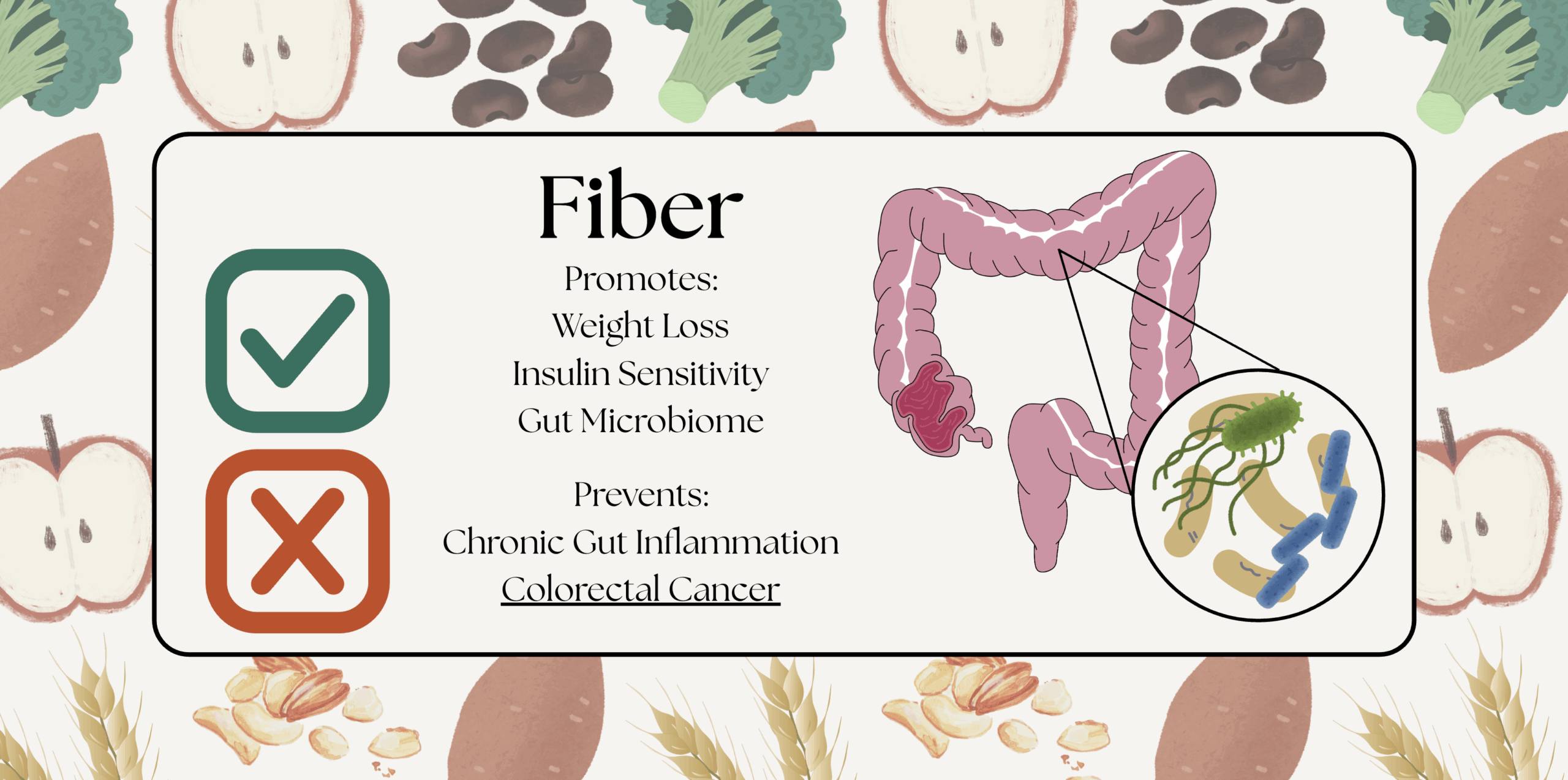
Whether you’re a self-proclaimed “gym rat” or just someone who got swept in the recent protein craze, you’ve definitely obsessed over your protein intake before. Young people across the world continuously reach for products with a high protein content, however, they consistently overlook another important macronutrient: fiber. According to a review paper published in Nutrients, fiber is a non-digestible form of carbohydrates that is abundant in most plant-based foods. Apart from its claim to fame in alleviating constipation, fiber has many additional health benefits such as aiding in weight loss, improving insulin sensitivity, and nourishing our gut microbiota. These health benefits are particularly critical because they underlie many other pathologies. For example, gut dysbiosis can lead to chronic inflammation, resulting in food intolerances and autoimmune diseases. Moreover, as Swann and colleagues report, low fiber may play a role in the development of depression by increasing inflammation that changes the concentration of certain neurotransmitters.
Recent research has also highlighted fiber’s essential role in the rise of colorectal cancer rates. According to the American Cancer Society, the incidence rate of colorectal cancer amongst adults younger than 55 has risen from 11% in 1995 to 20% in 2019. The rates of colorectal cancer amongst young adults is only projected to worsen; the American Cancer Society estimates that rates of colorectal cancer in younger adults will double by 2030. When investigating the mechanism behind these stark statistics, Dr. Ramamoorthy said, “The risk factors for colorectal cancer have always been there and they haven’t changed—diet and exercise… As these cancers continue to affect our younger generations, we’re focusing on what’s being done to our food, how that’s affecting our microbiome, and how that is creating a chronic inflammatory state that is manifesting itself potentially in cancer in their gut.”
When focusing on diet, fiber intake stands out due to its well-known link to colorectal cancer. According to a paper published in the International Journal of Molecular Sciences, there is a relationship between low fiber intake and risk of colorectal cancer development, as well as varying long-term prognosis in colorectal cancer survivors based on their fiber intake. Dietary fiber plays many different roles in colorectal cancer development. One theory explored in the International Journal of Molecular Sciences is the impact of fibers on the gut microbiota. In general, fibers regulate the gut microbiome, which can deter the onset of colorectal cancer. When digested by microbiota, fibers can produce butyrate, an antiproliferative molecule that can inhibit abnormal cell growth. Dietary fibers also play another essential role in delaying the onset of colorectal cancer through decreasing bile acids. According to Naumann and colleagues, fibers prevent the reabsorption of bile acids in the body and assist their transit to the colon. Fiber’s role in decreasing bile acids is important; a paper published in the World Journal of Clinical Cases described bile acids as “strong carcinogens or promoters of colon cancers”. Thus, the exploration of the health benefits of fiber coupled with the rise of incidence of colorectal cancers amongst young adults should emphasize the importance of adequate fiber intake in our diet. However, according to the American Society for Nutrition, only 7% of adults adhere to the recommended daily fiber intake in what is now called an inadequate fiber “endemic”. The over-reliance of western societies on ultra processed foods rather than plant-based foods has also contributed to the low intake of fiber amongst the general population. In an effort to decrease the incidence rates of colorectal cancers, the critical role of fiber and its many health benefits should be further stressed by public health officials.
Copy editor: Lakshmi Subramanian
Photography source: Canva design by Lakshmi Subramanian