
Faster Breeding With Haploid Cells
Simar Chahal
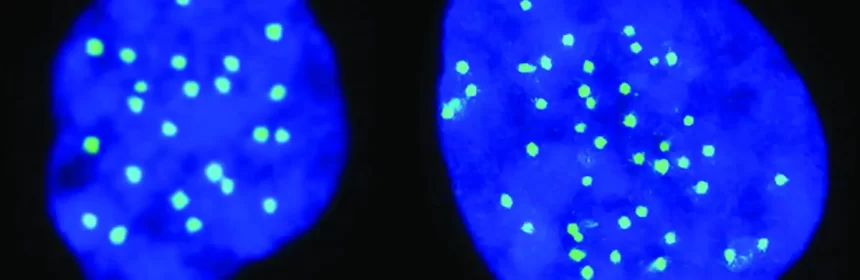
Selective breeding in livestock has been around for a long time, however it is limited by time constraints and randomization. During meiosis, parents’ genes are randomly shuffled creating offspring with unpredictable genetic combinations. This genetic shuffling can slow progress for scientists who are trying to select for specific traits among farm animals. A new approach offers a potential solution to this problem. Researchers have developed a way to derive haploid embryonic stem cells (containing one set of chromosomes rather than two) and differentiate them into spermatid-like cells for fertilization. Since these cells have one copy of each gene instead of two, they are easier to edit than traditional diploid cells which have two copies. Additionally, there is a lower risk of recessive mutations without a second gene copy. After the genes are modified, the spermatid-like cells can be injected directly into an egg so that an embryo can begin developing. The result of this haploid cell method is livestock which have targeted characteristics such as improved disease resistance or reproductive performance. The livestock are produced over the course of one generation. Compared to traditional breeding (happens over the course of multiple generations) and cloning methods, this stem cell approach is much faster and more predictable. Overall this is a huge breakthrough in animal genomic editing and has the potential to completely transform the future of livestock and genomic editing methods.
Copy editor: Aubrey Taylor
Photography source: https://www.newscientist.com/article/2081250-human-stem-cell-with-half-a-genome-could-help-infertile-couples/