
The Paywall to Practice: How the Big Beautiful Bill Narrows the Path into Healthcare
Evelyn Lynch
When most people imagine barriers to entering the healthcare profession, they may think of “weed-out” classes such as Organic Chemistry or Biology. What many people may not consider, however, is the role of legislation, which, with the advent of the Big Beautiful Bill, may affect who can become a physician, nurse, physician assistant, or other healthcare provider based on one’s socioeconomic position.
Class disparity has been a long standing issue when it comes to admissions for healthcare programs, with a Yale-led study revealing that those in the lowest income level were half as likely to be accepted into medical school compared to those in the highest income bracket. This is likely due to many factors, such as the ability to pay for tuition and fees, with the average cost of medical school being $228,959 in the United States. Other professional healthcare programs, such as two-year Physician Assistant programs, can cost anywhere from $20,000 to $100,000 per year. Apart from allowing for an easier time in paying the tuition itself, coming from a wealthy socioeconomic background affords applicants the freedom to focus on activities such as volunteering, clubs, and shadowing experience, boosting their chances of admission.
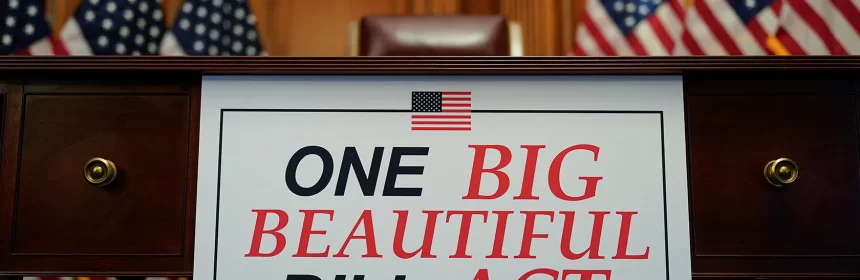
The Big Beautiful Bill, a massive piece of legislation passed on July 4th, 2025, aims to streamline government spending, but may in fact deepen the socioeconomic divide for students wishing to enter graduate programs. The Big Beautiful Bill is set to have sweeping effects on the field of healthcare as a whole, affecting medicare recipients on the patient side and the availability of federal loans and assistance for hopeful pre-health students.
Previously, Grad PLUS loans existed to help cover the gap between other sources of financial aid, such as scholarships, and the cost of attendance, allowing students to borrow up to the estimated full cost of attendance. With The Big Beautiful Bill, however, Grad PLUS loans have been eliminated, and a cap has been placed on the amount in federal loans that is allowed to be taken out by graduate students. For “professional” degrees, the cap is $50,000 per year, and for traditional graduate degrees the cap is $20,000 per year.
Alongside this, a recent proposal from the Department of Education may exclude both nurses and physician assistants from the definition of “professional degrees”, further limiting their ability to access graduate loans.
With Grad PLUS loans being eliminated, prospective pre-health students who don’t come from a wealthy socioeconomic background will likely have to rely on private loans, which often have significantly higher interest rates, or forego graduate school completely.
We are already in the midst of a healthcare shortage in the United States – by 2028, there is expected to be a shortage of up to 100,000 healthcare providers in the U.S, adding further strain to the healthcare system. This legislation will make it more difficult not only for future physicians to enter medical school, but will also affect mid-level providers such as Nurse Practitioners and Physician Assistants, who have been extremely helpful in addressing the physician shortage due to their flexibility and shorter education. Overall, The Big Beautiful Bill does not signal good news for prospective healthcare students. As lawmakers on Capitol Hill debate budgets, prospective health students have another, more personal, internal debate: Can I afford to become a provider at all?
Copy editor: Jaabili Gosukonda
Photography source: https://www.americanprogress.org/article/the-truth-about-the-one-big-beautiful-bill-acts-cuts-to-medicaid-and-medicare/